


 |
F.A.Q. Frequently Asked Questions If the answer you are looking for is not on this list, send your question info[at]novarossi.it
|
The right engine temperature will vary widely, depending on the air temperature, fuel used, altitude, driving style, air flow conditions of the body and several other factors.
There is absolutely no way anyone can tell you an ideal engine temperature.
It is generally accepted that a proper range of temperatures is between 95 and 140 degrees Celsius (or about 203 and 284 degrees Fahrenheit).
The biggest variable of all in measuring engine temperature is where and how the measurement is taken.
Your infrared thermometer may be calibrated completely different than ours, or you may be pointing at a different spot on the head.
We usually check the temperature pointing the infrared on the glow plug.
R26CR
Sport Flying 8x6 or 9x5 inch props
3D Flying 9x4 inch prop
R46CR
Sport Flying 10x6 or 11x5 inch props
3D Flying 11x4 or 12x4
R56CR
Sport Flying 10x7 or 11x6 props
3D Flying 12x4
R60CR
Sport Flying 11x7 or 12x6 props
3D Flying 12x4 or 13x4
R91CR
Sport Flying 13x6 or 13x7
3D Flying 14x

Only use commercially available fuel formulated for model engines.
Composition fuel after the running :
1/8 ON ROAD / RALLY-GT: 25% nitro + 6% castrol oil + 4% synthetic oil + 65% pure methanol
1/10 TOURING: 16% nitro + 6% castrol oil + 4% synthetic oil + 74% pure methanol
1/8 OFF ROAD: 25% nitro / 3% castrol oil / 7% synthetic oil / 65% pure methanol
33% nitro / 3% castrol oil / 7% synthetic oil / 57% pure methanol
MARINE:
25-30% nitro / 6% castrol oil / 4% synthetic oil / 60-65% pure methanol
PLANE:
10% nitro / 10% castrol oil / 10% synthetic oil / 70% pure methanol
HELICOPTER: See sheet user manual
Before using the fuel, shake the fuel can thoroughly to blend the oil and nitro with the methanol.
Do not leave the fuel can open for long periods, as methanol quickly absorbs moisture from the air.
This degrades the quality of the fuel, and increases the potential of corrosion forming inside the engine.
Do not use fuel that has been unused for 6 months or longer
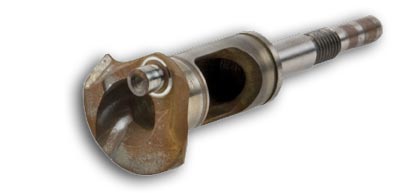
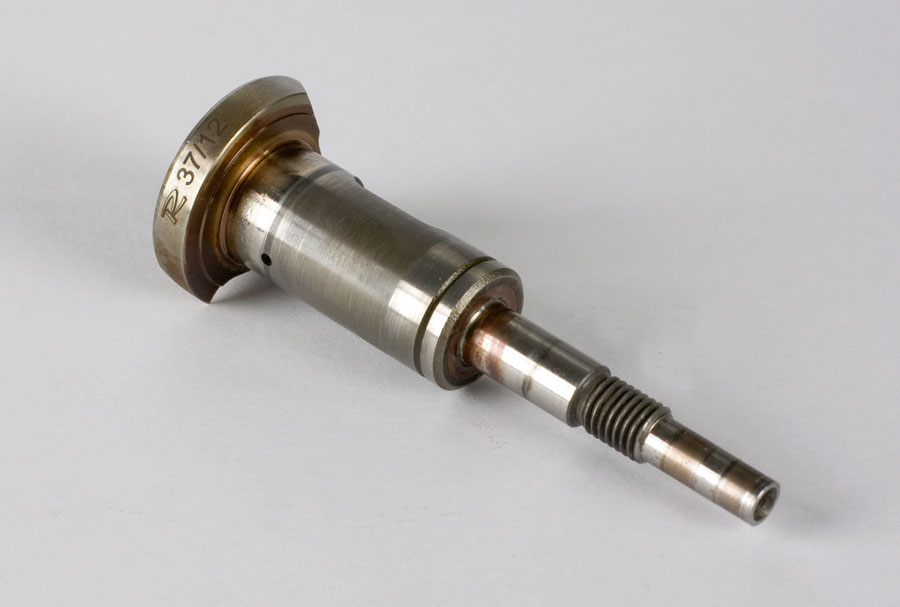
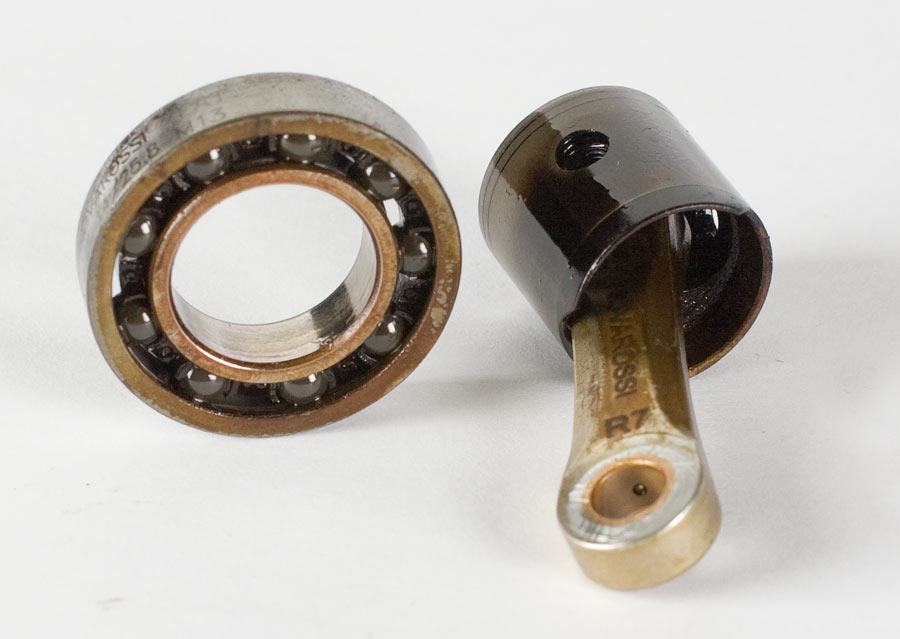
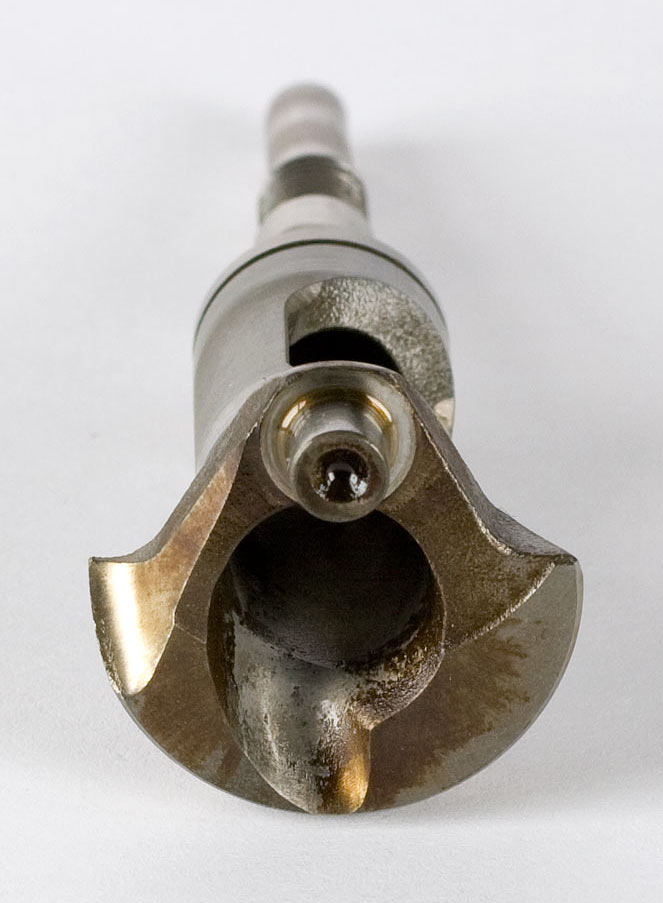
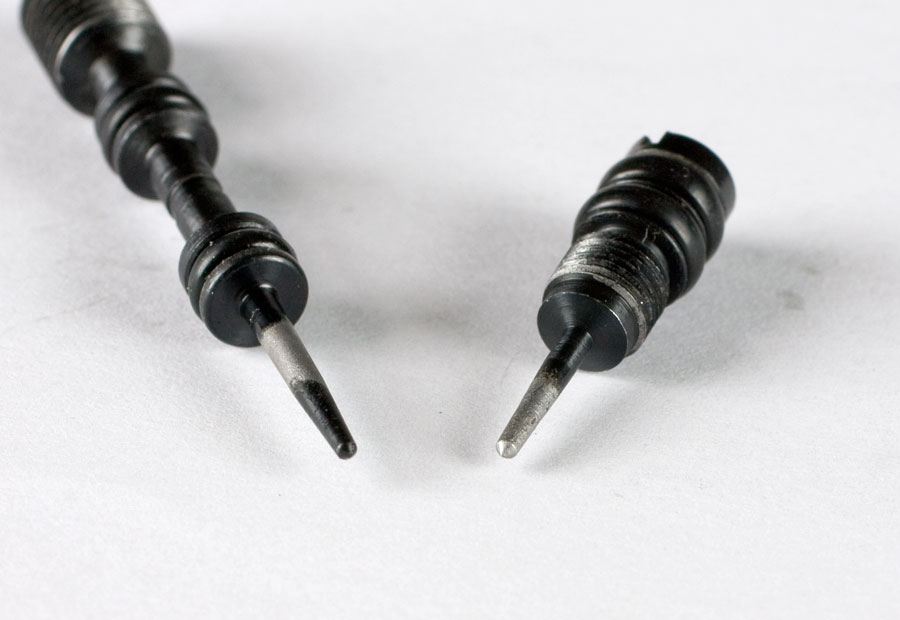
In case of using bad fuel, like above, we cannot give any warranty on our product.
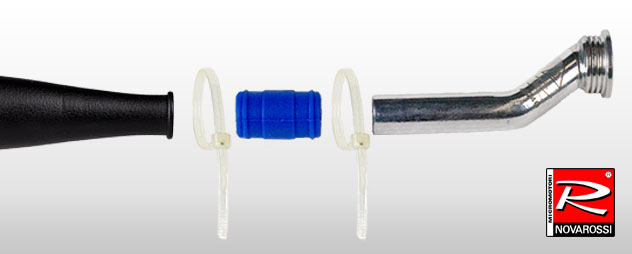
The air filter is a critical component of your engine.
A properly maintained air filter is essential to the life and performance of the engine.
Never run your engine without an air filter because dust and dirt will enter the engine and severely damage it.
Always use air filter oil on your air filter; the oil softens the foam, allowing it to trap dirt more easily.
Do not let your foam air filter become dried out.
Apply some air filter oil to the foam and rub the foam between your fingers to work in the oil.
Make sure that the air filter is completely oiled and stays so at all times.
To clean the air filter, take the foam filter element out of the rubber boot and use an appropriate cleaner to rinse the dirt from the foam element.
Use your fingers to work the dirt out of the foam.
When all the dirt particles are removed (this may take several rinses), apply a small amount of foam element air filter oil.
Install the foam element in the rubber air filter boot, making sure that the foam is fully seated in the boot with no open spaces around it that air can leak through.
Large Diameter Venturi: increase consumption but also the top speed.
Small Diameter Venturi: reduce consumption but also the top speed.
The results of test show that forced convection heat transfer rates can be enhanced by up to X using low profiles cooling design. With the low profile heat sink, the measured temperatures on its surface can reach 15 to 20 °C / 59 to 68° F higher than normal because the temperature detection is done close to the glow plugs.
Minor curvilinear length exhaust system (manifold short): You get less acceleration at low RPM and increased top speed.
Increased length curved exhaust system (manifold long): You get more acceleration at low RPM and a reduction of top speed.
Conical exhaust manifold: Top speed higher, higher acceleration and higher fuel consumption.
Exhaust manifold normal: Top speed lower and lower fuel consumption.
A gas powered engine requires careful running in to allow the internal parts to achieve proper operating clearances.
Enrich the fuel-mixture from factory position by turning the main needle 1/2 turn counter-clockwise.
Run the car up to half-speed (at most) using moderate acceleration.
Do this for 4 - 5 tanks of fuel.
On the next 3 tanks of fuel, slowly increase the speed and acceleration, and start leaning the main needle setting by turning the needle clockwise.
To stop your engine when it's running at idle speed the best way is to close the holes of you INS-box or close the airfilter with your tumb.
When your engine is screaming due radio interference, close the little pipe of the exhaust with a piece of cloth, never try to stop it while pushing your shoe at the fly wheel.
| Download instructions manual in PDF version: - Extractor NOVA cod. 39609/39014/39015 - Extractor REX cod. 39371/39490 |
The exhaust system has 2 functions: to silence the engine and to optimize the performance of the engine. Silencing is determined by the design and constructions of the pipe (i.e., the number of chambers and the diameter of the tailpipe), while performance is governed by the shape and length of the exhaust system.
Shortening the length of the exhaust system will improve top-speed performance at the expense of some bottom-end torque.
Lengthening the length of the exhaust system will improve bottom-end torque at the expense of some top-speed performance.
However, shortening or lengthening the exhaust system beyond a certainpoint will dramatically decrease performance.
We have not found any special properties or advantages of using these running in fuels.
We use and recommend regular fuel to break in engines, using the same nitro content and brand fuel that we will run in the engine when racing.
If you run in your engines with normal commercial fuel we suggest to add an extra percentage of oil.
For the first litre of fuel add 5% oil (2,5% syntetic (NOVAROSSI 1.T2) and 2,5% normal (NOVAROSSI 1.T3) );
The second litre of fuel add 3% oil (same specification as mentioned above);
The third litre of fuel, add 2% oil.
Onroad engines about 10 liters.
Offroad engines about 30 liters.
When you replace a conrod in any engine must always replace the wrists piston-pin.
Also check that piston-pin has not signs of wear otherwise you have to replace it.
Sometimes the wire looks good but it is broken.
To know it check the condition of the glow plug by taking it out of the engine and applying a glow plug driver to it.
The coils of the spiral wire should glow a bright orange-white.
If the glow plug wire does not glow, check the battery in the glow plug driver by testing a new glow plug.
If the glow plug driver cannot cause the wire on a new glow plug to glow brightly, replace the battery.
Broken glow plugs are typically caused by running the engine too lean.
Always unscrew the main needle setting after you have experienced a glow plug failure.
Not enough cooling, running too lean, improper air filtration and cheap fuel cause quickly worn out of your engine.
The solutions:
Not enough cooling: If you don't have enough airflow over the head you won't be able to keep the engine cool.
Cut out your body according to the organizers rules.
Engine temperatures over 115°C (240°F) will cause the engine to wear quickly.
Running too lean... adjust the carb as often as needed so that you see the right trail of smoke at full speed.
Running it too lean on the top end will overheat the engine.
Improper air filtration: keep your air filter clean and oiled, upgrade to a high performance air filter (for instance Novarossi air filter code 30001or 34350) if you run in areas with excessive dust.
Cheap fuel: don't use cheap fuel.
Not all fuels are the same, some have less oil than others.
Too much oil will bog down the engine at idle and decrease performance, not enough oil will make the engine wear more quickly.
The fuel is what lubricates and cools the engine, don't skimp on quality.
Your idle speed adjustment screw is incorrectly tuned.
When you apply full brakes, the carburetor opening must not be completely shut off.
Your engine is running too lean.
Because not enough fuel is getting through the carburetor, the engine runs too hot and shuts off by itself.
The high-speed needle must be adjusted so more fuel gets to the engine.
Yes.
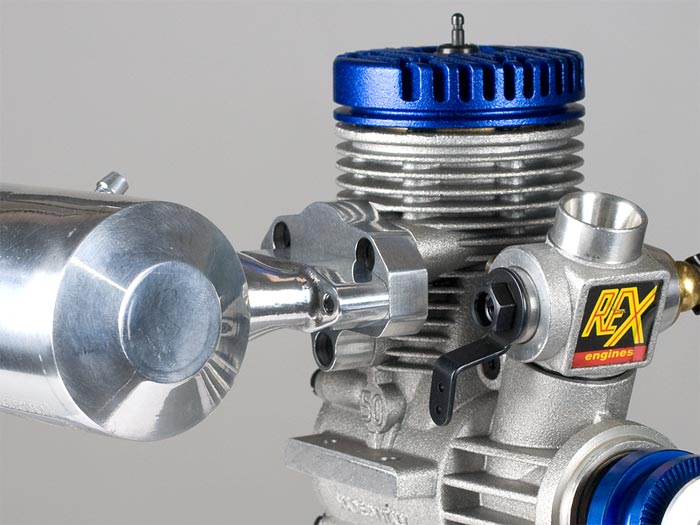
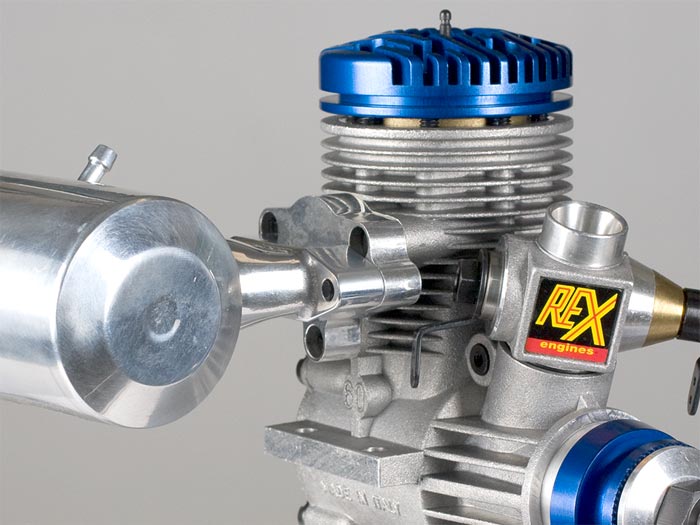
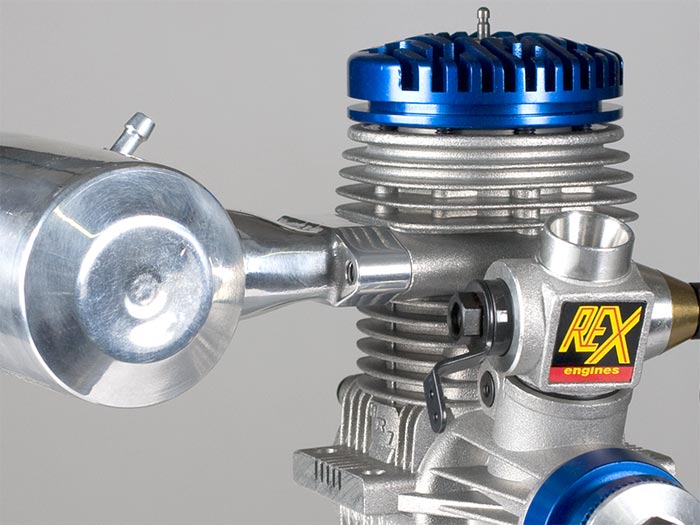
The CR9 pipe is a direct fit to the R91F engine.
However, for the R50F you need an adaptor (partnr: 21361) to use with the CR5 pipe.
The R60F engine requires also an adaptor (partnr: 21461) to be fitted with the CR6 pipe.
| R50F + 21361 + CR5 | R60F + 21461 + CR6 | R91F + CR9 | |||||||||||||||||||||||||||
 |
 |
 |
Fill up the fuel tank and dry-start the engine for about 5 seconds with the carburetor in idle position and without applying the glow plug driver; this allows the fuel to reach the engine. Then apply the glow plug driver and start the engine.
The engine should fire up immediately.
If the engine does not fire up immediately, check the fuel line to see if fuel is reaching the carburetor.
If fuel is not reaching the carburetor, remove the glow plug driver, cover the exhaust tailpipe and dry-start the engine for about 3 seconds.
This will build extra pressure in the line to the fuel tank, causing the fuel to be pushed to the carburetor.
Apply the glow plug driver and start the engine.
Once the engine has started apply a little throttle and allow the engine to warm up to operating temperature.
After run oil is a special oil that is meant to be used when an engine is to be stored for more than a week and not run.
Take off the air filter and glow plug, and drop about 5 drops of oil into each opening. Rotate the flywheel several complete rotations (pull the pullstarter spring or turn the flywheel on a starter box) to cycle the oil throughout the engine's internal parts.
We highly recommend using after run oil on any engine that you do not plan to run for more than a week.
Do not use a lubricant like WD-40 or oil that contains silicones on the internal surfaces of your nitro engine. We recommend Novarossi after run oil (code: 1m1).
It's about 4 Nm.
To adjust a venturi, unscrew the needle.
The engine will four-stroke slightly.
Now close the needle half a turn at a time, the engine will start to increase the RPM until you reach the maximum RPM, If the RPM drops after your last half a turn simply means you went to far, try reopening the needle to get the optimum carburetion.
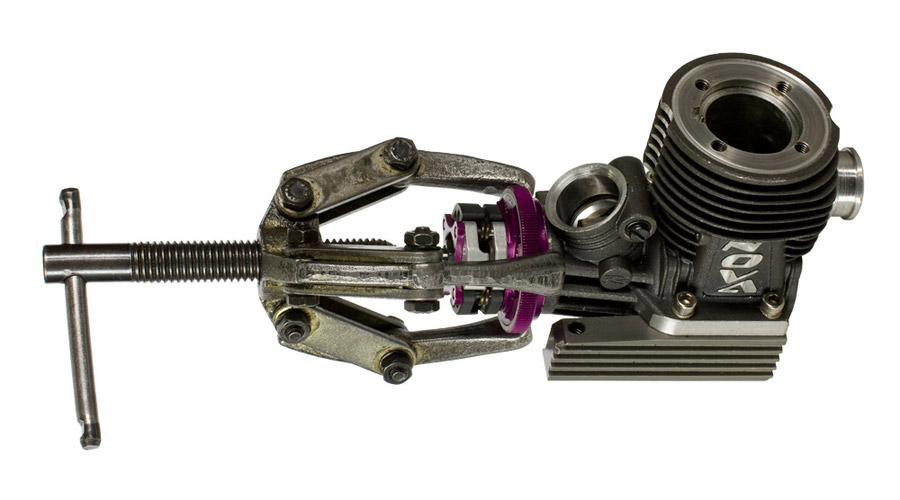
You have to use the right tools to remove the new patented rear bearing from the keep engines.
NOVA BEARING PULLERS ALONG WITH.
- Specific bearing removal tool : Cod. 39609 for 2,1cc or Cod. 39014 for 3,5cc.
- Specific pliers for Keep-on : Cod. 39611 for Keep-on.12 or Cod. 39018 for Keep-on.21 engine.
- Specific plier for Keep-off : Cod. 39019 for all Keep-off engines.
To perform this maintenance procedure of the carburetor you have to disassemble and clean it. In order to do this use petrol mixed with 5-10% oil and a small brush to remove all the dirt. DO NOT USE pure petrol otherwise the o-ring will be damaged. After the cleaning, assemble the carburetor paying attention to the correct placing of the slider: the long cut out must be mounted towards the air intake.
Be aware that the compression Ration engine setup must be used to run the content type based on the following data: outside ambient temperature 59/77°F & altitude between 500 and 1000 meters.
Please follow the below mentioned step to optimize your engine in case of temperature fluctuations:
- In a case of the temperature increase, add 0.05 / 0.1 mm head shim.
- When temperature of ambient decrease, engine must be subjected to a compression so remove 0,05/0,1mm head shim
Be also aware of the variation at your pressure altitude: 0,05/0,1 mm compression with increasing altitude.
Composition fuel after the running:
1/8 ON ROAD / RALLY-GT:
SHIM UNDERHEAD STANDARD: See exploded in closure
25% nitro + 6% castrol oil + 4% synthetic oil + 65% pure methanol
1/10 TOURING:
SHIM UNDERHEAD STANDARD: See exploded in closure
16% nitro + 6% castrol oil + 4% synthetic oil + 74% pure methanol
1/8 OFF ROAD:
SHIM UNDERHEAD STANDARD: See exploded in closure
25% nitro / 3% castrol oil / 7% synthetic oil / 65% pure methanol
33% nitro / 3% castrol oil / 7% synthetic oil / 57% pure methanol
MARINE:
SHIM UNDERHEAD STANDARD: See exploded in closure
25-30% nitro / 6% castrol oil / 4% synthetic oil / 60-65% pure methanol
PLANE:
SHIM UNDERHEAD STANDARD: See exploded in closure
10% nitro / 10% castrol oil / 10% synthetic oil / 70% pure methanol
HELICOPTER:
SHIM UNDERHEAD STANDARD: See exploded in closure
10% nitro / 18% to 22% synthetic oil / 62% to 70% pure methanol
If you increase or decrease the % of nitro you must change the thickness of the shims.
The ground rule is: increase 0,1mm the thickness of the shim when you add 10% of nitro and vice versa.
All are APC props with D-1 hubs.
8.75 x 9 W
8 x 7,5
8.75 x 5
8.5 x 7.25
8.75 x 7.5 NN
7.8 x 7
7.8 x 6
7.4 x 7.5C Carbon Fiber
7.4 x 7.7C Carbon Fiber
The 8+ inch sizes would benefit by taking 1/8 off each tip and testing and continuing that process until you get a good combination of RPM and plane performance.
The smaller prop sizes are for very low drag lightly loaded aircraft.
On all 3,5cc engines to 2,4 Nm
On all 2,1cc engines to 1,5 Nm
On all allen screws heads to 2,2 Nm
This engine will operate with a number of different prop sizes and pitches. However, the engine is often used by aerobatic pattern flyers. These modelers typically use 11 x 7, 11 x 8 and 11 x 9 propellers.With the 11 x 7 being the most common and also a good prop to use during the break in period because it provides less of a load on the engine.
Use could use 12" and even 13" diameter props with this engine for different kinds of models, such as those who fly 3D. With each inch increase in diameter a commonly used practice is to also reduce the pitch by 1". So 12 x 6 and 13 x 5 or 14 x 4 would be examples.
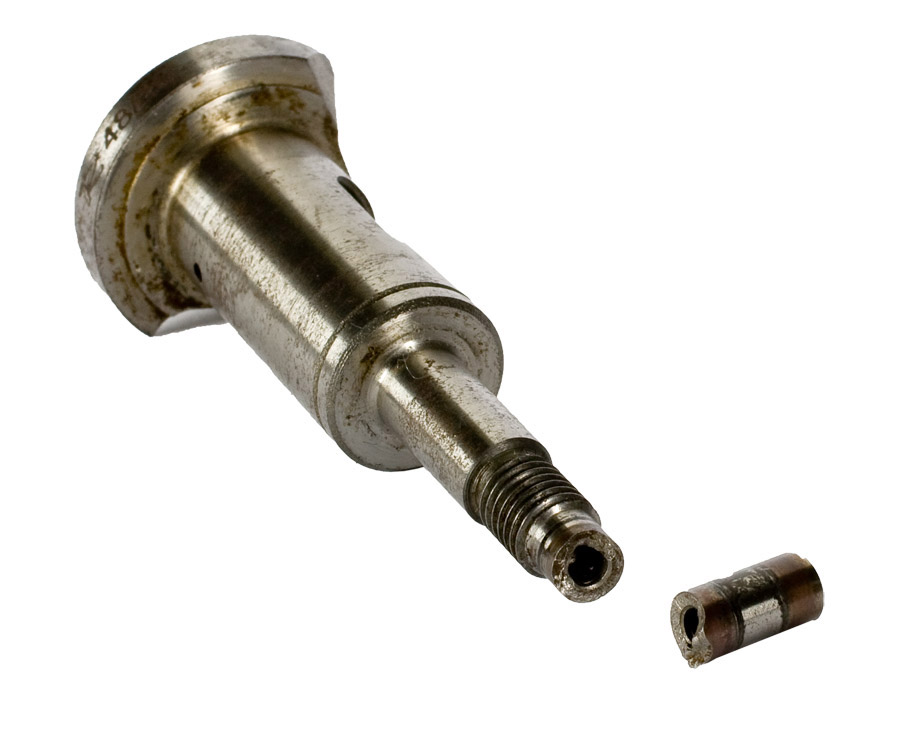
You can damage the shaft if you don’t use the correct tool for extract the clutch.

 NOVAROSSI WORLD S.r.l.

